Friday, 22 August 2014

Epigenetic changes in children with Crohn's disease seen in study

Date:
August 22, 2014
Source:
Wolters Kluwer Health: Lippincott Williams and Wilkins
Summary:
A wide range of epigenetic changes -— alterations in DNA across the genome that may be related to key environmental exposures -— in children with Crohn's disease (CD), has been observed and reported in a new study. Crohn's disease is a painful, medically incurable illness that may attack anywhere along the digestive system. Crohn's disease and ulcerative colitis, which involves only the large intestine (colon), are the two main types of inflammatory bowel disease.

A New study finds a wide range of epigenetic changes -- alterations in DNA across the genome that may be related to key environmental exposures -- in children with Crohn's disease (CD), reportsInflammatory Bowel Diseases, official journal of the Crohn's & Colitis Foundation of America (CCFA). The journal is published by Lippincott Williams & Wilkins, a part of Wolters Kluwer Health.
The study provides "compelling evidence" of alterations of DNA in several regions of the genome in children with CD, according to Professor Jack Satsangi of University of Edinburgh and colleagues. In addition to providing new insights into how genes and the environment interact, the results may have early implications for clinical management of CD.
Epigenetic Changes in Childhood-Onset Crohn's Disease
The researchers performed a "genome-wide" study in children with newly diagnosed CD, before any treatment, to look for possible epigenetic changes that may affect gene behavior. Epigenetic changes reflect the impact of a wide range of environmental factors on genes.
The results showed strong evidence of such changes at 65 different sites across the genome. Nineteen sites showed clustering of epigenetic changes, pointing at genetic pathways that might be relevant to CD development.
Similar patterns were present in a separate group of children who had been treated for CD, as well as in a group of treated adults.
The study highlighted "highly significant" changes in two specific gene locations (loci), which include genes responsible for immune and cellular functions that could contribute to the development of CD. Two probes for these loci were highly accurate in predicting which children would have CD, providing a potentially useful "biomarker" for use as a diagnostic test.
'Exciting and Immediate Implications' for Clinical Management
One specific gene location seemed particularly important, as it has been implicated in a number of different cancers, including colorectal cancer. The same area has a known role in the development of T-cells, a key type of immune cell.
The study also identified a number of other loci that might play a role in the development of CD, warranting further study.
The new research adds to the growing body of evidence of epigenetic changes in diseases such as rheumatoid arthritis, multiple sclerosis, type 2 diabetes, and obesity. The findings highlight the importance of combining information on DNA changes, genes, and gene expression in future studies of these and other complex diseases, Dr Satsangi and colleagues believe.
Crohn's disease is a painful, medically incurable illness that may attack anywhere along the digestive system. Crohn's disease and ulcerative colitis, which involves only the large intestine (colon), are the two main types of inflammatory bowel disease. Some 1.4 million American adults and children suffer from CD or ulcerative colitis. Although much more research is needed to understand the epigenetic changes, the investigators believe their findings could lead to advances in clinical management of childhood-onset CD in the near future. They write, "There are exciting and immediate implications for early clinical translation; the discovery of easily accessible biomarkers in peripheral blood to predict disease susceptibility, progression or response to therapy and the potential for new therapeutic targets."

Creating pomegranate drug to stem Alzheimer's, Parkinson's

Date:
August 22, 2014
Source:
University of Huddersfield
Summary:
Research will look to produce compound derivatives of punicalagin for a drug that would treat neuro-inflammation and slow down the progression of Alzheimer's disease, scientists report. The onset of Alzheimer's disease can be slowed and some of its symptoms curbed by a natural compound that is found in pomegranate. Also, the painful inflammation that accompanies illnesses such as rheumatoid arthritis and Parkinson's disease could be reduced, according to the findings of the two-year project.

Creating pomegranate drug Image
The key breakthrough by Dr Olajide and his co-researchers is to demonstrate that punicalagin, which is a polyphenol – a form of chemical compound – found in pomegranate fruit, can inhibit inflammation in specialised brain cells known as micrologia. This inflammation leads to the destruction of more and more brain cells, making the condition of Alzheimer’s sufferers progressively worse.
Dr.Olumayokun Olajide's research will look to produce compound derivatives of punicalagin for a drug that would treat neuro-inflammation and slow down the progression of Alzheimer's disease
The onset of Alzheimer's disease can be slowed and some of its symptoms curbed by a natural compound that is found in pomegranate. Also, the painful inflammation that accompanies illnesses such as rheumatoid arthritis and Parkinson's disease could be reduced, according to the findings of a two-year project headed by University of Huddersfield scientist Dr Olumayokun Olajide, who specialises in the anti-inflammatory properties of natural products.
Now, a new phase of research can explore the development of drugs that will stem the development of dementias such as Alzheimer's, which affects some 800,000 people in the UK, with 163,000 new cases a year being diagnosed. Globally, there are at least 44.4 million dementia sufferers, with the numbers expected to soar.
The key breakthrough by Dr Olajide and his co-researchers is to demonstrate that punicalagin, which is a polyphenol -- a form of chemical compound -- found in pomegranate fruit, can inhibit inflammation in specialised brain cells known as micrologia. This inflammation leads to the destruction of more and more brain cells, making the condition of Alzheimer's sufferers progressively worse.
There is still no cure for the disease, but the punicalagin in pomegranate could prevent it or slow down its development.
Dr Olajide worked with co-researchers -- including four PhD students -- in the University of Huddersfield's Department of Pharmacy and with scientists at the University of Freiburg in Germany. The team used brain cells isolated from rats in order to test their findings. Now the research is published in the latest edition of the journalMolecular Nutrition & Food Research and Dr Olajide will start to disseminate his findings at academic conferences.
He is still working on the amounts of pomegranate that are required, in order to be effective.
"But we do know that regular intake and regular consumption of pomegranate has a lot of health benefits -- including prevention of neuro-inflammation related to dementia," he says, recommending juice products that are 100 per cent pomegranate, meaning that approximately 3.4 per cent will be punicalagin, the compound that slows down the progression of dementia.
Dr Olajide states that most of the anti-oxidant compounds are found in the outer skin of the pomegranate, not in the soft part of the fruit. And he adds that although this has yet to be scientifically evaluated, pomegranate will be useful in any condition for which inflammation -- not just neuro-inflammation -- is a factor, such as rheumatoid arthritis, Parkinson's and cancer.
The research continues and now Dr Olajide is collaborating with his University of Huddersfield colleague, the organic chemist Dr Karl Hemming. They will attempt to produce compound derivatives of punicalagin that could the basis of new, orally administered drugs that would treat neuro-inflammation.
Dr Olajide has been a Senior Lecturer at the University of Huddersfield for four years. His academic career includes a post as a Humboldt Postdoctoral Research Fellow at the Centre for Drug Research at the University of Munich. His PhD was awarded from the University of Ibadan in his native Nigeria, after an investigation of the anti-inflammatory properties of natural products.
He attributes this area of research to his upbringing. "African mothers normally treat sick children with natural substances such as herbs. My mum certainly used a lot of those substances. And then I went on to study pharmacology!"

Proteins: New class of materials discovered

Date:
August 22, 2014
Source:
Helmholtz-Zentrum Berlin für Materialien und Energie
Summary:
Scientists have characterized a new class of materials called protein crystalline frameworks. Thanks to certain helper substances, in PCFs proteins are fixated in a way so as to align themselves symmetrically, forming highly stable crystals.

Proteins Image
Arrangement of protein concanavalin
A molecules in two different protein
crystalline frameworks.


Sientists at the Helmholtz Center Berlin (HZB) along with researchers at China's Fudan University have characterized a new class of materials called protein crystalline frameworks (PCFs).
Thanks to certain helper substances, in PCFs proteins are fixated in a way so as to align themselves symmetrically, forming highly stable crystals. Next, the HZB and Fudan University researchers are planning on looking into how PCFs may be used as functional materials. Their findings are being published today in the scientific journalNature Communications.Proteins are sensitive molecules. Everyone knows that -- at least from having boiled eggs. Under certain circumstances -- like immersion in boiling water -- they denature, losing their natural shape, and becoming hard. True, researchers have been able to handle these substances for some time now, even to the point of crystallizing them in their native state. Admittedly, though, this does require considerable effort, but it is the only way how researchers can find out the structure of these substances at high resolution. Moreover, protein crystals are extremely fragile, highly sensitive and hard to handle.
Now, for the first time ever, scientists at China's Fudan University have managed to work around these downsides by linking the protein concanavalin A to helper molecules belonging to the sugar family, and to the dye rhodamin. The concanavalin molecules that have been thus fixated tended to arrange themselves symmetrically within the helper molecule framework, forming crystals, in which the proteins achieve high stability and are intricately interconnected -- into a protein crystalline framework.
Developing molecular structures like these is pointless unless you know exactly how they form and what their structure looks like at the level of the atoms. During the quest for suitable experimental methods, the Shanghai researchers turned to a Chinese scientist working at the HZB for help. She called her colleagues' attention to the MX beamlines at the HZB's electron storage ring BESSY II.
"Here at the HZB, we were able to offer them our highly specialized crystallography stations -- the perfect venue for characterizing PCFs at high resolutions," says Dr. Manfred Weiss, one of the leading scientists working at the HZB-MX laboratory. It quickly became clear that the helper molecules even allowed the researchers to decide how powerfully they wanted them to penetrate the protein frameworks. "This gives the PCFs a great deal of flexibility and variability, which we'll always keep in mind when doing research on potential applications," says Manfred Weiss.

In our digital world, are young people losing the ability to read emotions?

Date:
August 22, 2014
Source:
University of California - Los Angeles
Summary:
Are young people losing the ability to read emotions in our digital world? Scientists report that sixth-graders who went five days without even glancing at a smartphone, television or other screen did substantially better at reading emotions than sixth-graders from the same school who, as usual, spent hours each day looking at their smartphones and other screens.
Students Image
Students in the study looked at photos and were tested on their ability to recognize the emotions of those pictured.


Children's social skills may be declining as they have less time for face-to-face interaction due to their increased use of digital media, according to a UCLA psychology study.

UCLA scientists found that sixth-graders who went five days without even glancing at a smartphone, television or other digital screen did substantially better at reading human emotions than sixth-graders from the same school who continued to spend hours each day looking at their electronic devices.
"Many people are looking at the benefits of digital media in education, and not many are looking at the costs," said Patricia Greenfield, a distinguished professor of psychology in the UCLA College and senior author of the study. "Decreased sensitivity to emotional cues -- losing the ability to understand the emotions of other people -- is one of the costs. The displacement of in-person social interaction by screen interaction seems to be reducing social skills."
The research will be in the October print edition of Computers in Human Behavior and is already published online.
The psychologists studied two sets of sixth-graders from a Southern California public school: 51 who lived together for five days at the Pali Institute, a nature and science camp about 70 miles east of Los Angeles, and 54 others from the same school. (The group of 54 would attend the camp later, after the study was conducted.)
The camp doesn't allow students to use electronic devices -- a policy that many students found to be challenging for the first couple of days. Most adapted quickly, however, according to camp counselors.
At the beginning and end of the study, both groups of students were evaluated for their ability to recognize other people's emotions in photos and videos. The students were shown 48 pictures of faces that were happy, sad, angry or scared, and asked to identify their feelings.
They also watched videos of actors interacting with one another and were instructed to describe the characters' emotions. In one scene, students take a test and submit it to their teacher; one of the students is confident and excited, the other is anxious. In another scene, one student is saddened after being excluded from a conversation.
The children who had been at the camp improved significantly over the five days in their ability to read facial emotions and other nonverbal cues to emotion, compared with the students who continued to use their media devices.
Researchers tracked how many errors the students made when attempting to identify the emotions in the photos and videos. When analyzing the photos, for example, those at the camp made an average of 9.41 errors at the end of the study, down from 14.02 at the beginning. The students who didn't attend the camp recorded a significantly smaller change. For the videos, the students who went to camp improved significantly, while the scores of the students who did not attend camp showed no change. The findings applied equally to both boys and girls.
You can't learn nonverbal emotional cues from a screen in the way you can learn it from face-to-face communication," said lead author Yalda Uhls, a senior researcher with the UCLA's Children's Digital Media Center, Los Angeles. "If you're not practicing face-to-face communication, you could be losing important social skills."
Students participating in the study reported that they text, watch television and play video games for an average of four-and-a-half hours on a typical school day. Some surveys have found that the figure is even higher nationally, said Uhls, who also is the Southern California regional director of Common Sense Media, a national nonprofit organization.
Greenfield, director of the CDMC, considers the results significant, given that they occurred after only five days.
She said the implications of the research are that people need more face-to-face interaction, and that even when people use digital media for social interaction, they're spending less time developing social skills and learning to read nonverbal cues.
"We've shown a model of what more face-to-face interaction can do," Greenfield said. "Social interaction is needed to develop skills in understanding the emotions of other people."
Uhls said that emoticons are a poor substitute for face-to-face communication: "We are social creatures. We need device-free time."
Story Source:
The above story is based on materials provided by University of California - Los Angeles. The original article was written by Stuart Wolpert


Experts follow gut reaction in autism treatment study


About half of all children and adults with autism suffer from chronic gastrointestinal problems, causing frequent pain, discomfort and irritability. Research out of Arizona State University suggests these gastrointestinal (GI) complications may be due, in part, to abnormal gut bacteria.
A new study approved by the U.S. Food and Drug Administration and led by Arizona State University will examine a novel treatment – called fecal microbiota transplant (FMT) – for GI problems in children with autism. The treatment involves transferring about 1,000 different species of live gut bacteria from a healthy donor that then act like a broad-spectrum probiotic treatment to restore normal gut bacteria.
FMT has been used to treat serious Clostrium difficle infections that kill up to 15,000 people each year in the United States. Determining the safety and tolerability of using FMT to treat GI problems in children with autism is driving the study.
The FDA has approved a pilot treatment study of 20 children with autism, ages 7 to 17 years, and moderate to severe gastrointestinal problems.
Missing bacteria
Led by professor Rosa Krajmalnik-Brown, an expert on evaluating the composition of gut bacterial communities, and professor James Adams, director of the ASU Autism/Asperger’s Research Program, the ASU research team published a scientific paper last year demonstrating that children with autism were missing several hundred species of gut bacteria compared to typical children.
“Our initial work found major differences in the gut bacteria of children with autism compared to typical children, and our subsequent work has confirmed those findings,” said Krajmalnik-Brown. “Children with autism seem to be missing hundreds of beneficial gut bacteria.”
“Many children and adults with autism have chronic gut problems, sometimes lasting for many years and seriously affecting their quality of life,” said Adams. “We think this treatment may be helpful.”
The team’s hypothesis is that FMT will “reseed” the gut with beneficial bacteria that will help diminish GI problems and possibly reduce autistic symptoms.
Several studies show that FMT may also be helpful in treating other GI problems, such as ulcerative colitis, Crohn’s disease, inflammatory bowel disease, irritable bowel syndrome and chronic constipation.
Beneficial versus harmful
The human gut typically contains more than 1,000 different species of bacteria – most of them beneficial. These bacteria help with digesting food, making certain vitamins, improving GI function and protecting against pathogenic bacteria.
However, there are a few dangerous bacteria, such as Clostidium difficile (C. difficile), which can cause serious, life-threatening infections. C. difficile kills about 15,000 people per year in the U.S., but a single dose of FMT has been shown to cure C. difficile with 92 percent effectiveness, usually within a few days.
Collaborating with Northern Arizona University and University of Arizona, the ASU team will lead the treatment portion of the study, with the help of Sharon McDonough-Means, a developmental pediatrician involved in the care of children with autism and previous research studies. Greg Caporaso at NAU, an expert in computational and statistical methods for studying communities of microorganisms, will analyze the effect of FMT on gut bacterial communities, and Matthew Sullivan at UA will investigate the viruses that infect gut bacteria, and thereby affect bacterial populations in the gut.
The new initiative is a follow-up to a previous study that demonstrated that treatment with a powerful oral antibiotic, vancomycin, led to a temporary improvement in both gut symptoms and symptoms of autism, presumably because it killed off harmful bacteria in the gut. However, when the treatment was stopped, the benefits were lost, presumably because there was insufficient “reseeding” of the gut with beneficial bacteria.
The study is funded primarily by the Arizona Board of Regents, with additional funding from the Autism Research Institute.
More information on the study can be found at autism.asu.edu.
 

MIT helps drones monitor their own health on long flights

In the near future, the package that you ordered online may be deposited at your doorstep by a drone: Last December, online retailer Amazon announced plans to explore drone-based delivery, suggesting that fleets of flying robots might serve as autonomous messengers that shuttle packages to customers within 30 minutes of an order.
To ensure safe, timely, and accurate delivery, drones would need to deal with a degree of uncertainty in responding to factors such as high winds, sensor measurement errors, or drops in fuel. But such “what-if” planning typically requires massive computation, which can be difficult to perform on the fly.
Now MIT researchers have come up with a two-pronged approach that significantly reduces the computation associated with lengthy delivery missions. The team first developed an algorithm that enables a drone to monitor aspects of its “health” in real time. With the algorithm, a drone can predict its fuel level and the condition of its propellers, cameras, and other sensors throughout a mission, and take proactive measures — for example, rerouting to a charging station — if needed.
The researchers also devised a method for a drone to efficiently compute its possible future locations offline, before it takes off. The method simplifies all potential routes a drone may take to reach a destination without colliding with obstacles.
In simulations involving multiple deliveries under various environmental conditions, the researchers found that their drones delivered as many packages as those that lacked health-monitoring algorithms — but with far fewer failures or breakdowns.
“With something like package delivery, which needs to be done persistently over hours, you need to take into account the health of the system,” says Ali-akbar Agha-mohammadi, a postdoc in MIT’s Department of Aeronautics and Astronautics. “Interestingly, in our simulations, we found that, even in harsh environments, out of 100 drones, we only had a few failures.”
Agha-mohammadi will present details of the group’s approach in September at the IEEE/RSJ International Conference on Intelligent Robots and Systems, in Chicago. His co-authors are MIT graduate student Kemal Ure; Jonathan How, the Richard Cockburn Maclaurin Professor of Aeronautics and Astronautics; and John Vian of Boeing.
Tree of possibilities
Planning an autonomous vehicle’s course often involves an approach called Markov Decision Process (MDP), a sequential decision-making framework that resembles a “tree” of possible actions. Each node along a tree can branch into several potential actions — each of which, if taken, may result in even more possibilities. As Agha-mohammadi explains it, MDP is “the process of reasoning about the future” to determine the best sequence of policies to minimize risk.
MDP, he says, works reasonably well in environments with perfect measurements, where the result of one action will be observed perfectly. But in real-life scenarios, where there is uncertainty in measurements, such sequential reasoning is less reliable. For example, even if a command is given to turn 90 degrees, a strong wind may prevent that command from being carried out.
Instead, the researchers chose to work with a more general framework of Partially Observable Markov Decision Processes (POMDP). This approach generates a similar tree of possibilities, although each node represents a probability distribution, or the likelihood of a given outcome. Planning a vehicle’s route over any length of time, therefore, can result in an exponential growth of probable outcomes, which can be a monumental task in computing.
Agha-mohammadi chose to simplify the problem by splitting the computation into two parts: vehicle-level planning, such as a vehicle’s location at any given time; and mission-level, or health planning, such as the condition of a vehicle’s propellers, cameras, and fuel levels.
For vehicle-level planning, he developed a computational approach to POMDP that essentially funnels multiple possible outcomes into a few most-likely outcomes.
“Imagine a huge tree of possibilities, and a large chunk of leaves collapses to one leaf, and you end up with maybe 10 leaves instead of a million leaves,” Agha-mohammadi says. “Then you can … let this run offline for say, half an hour, and map a large environment, and accurately predict the collision and failure probabilities on different routes.”
He says that planning out a vehicle’s possible positions ahead of time frees up a significant amount of computational energy, which can then be spent on mission-level planning in real time. In this regard, he and his colleagues used POMDP to generate a tree of possible health outcomes, including fuel levels and the status of sensors and propellers.
Proactive delivery
The researchers combined the two computational approaches, and ran simulations in which drones were tasked with delivering multiple packages to different addresses under various wind conditions and with limited fuel. They found that drones operating under the two-pronged approach were more proactive in preserving their health, rerouting to a recharge station midmission to keep from running out of fuel. Even with these interruptions, the team found that these drones were able to deliver just as many packages as those that were programmed to simply make deliveries without considering health.
Going forward, the team plans to test the route-planning approach in actual experiments. The researchers have attached electromagnets to small drones, or quadrotors, enabling them to pick up and drop off small parcels. The team has also programmed the drones to land on custom-engineered recharge stations.
“We believe in the near future, in a lab setting, we can show what we’re gaining with this framework by delivering as many packages as we can while preserving health,” Agha-mohammadi says. “Not only the drone, but the package might be important, and if you fail, it could be a big loss.”
 

Power generation from the meeting of river water and seawater

Where the river meets the sea, there is the potential to harness a significant amount of renewable energy, according to a team of mechanical engineers at MIT.
The researchers evaluated an emerging method of power generation called pressure retarded osmosis (PRO), in which two streams of different salinity are mixed to produce energy. In principle, a PRO system would take in river water and seawater on either side of a semi-permeable membrane. Through osmosis, water from the less-salty stream would cross the membrane to a pre-pressurized saltier side, creating a flow that can be sent through a turbine to recover power.
The MIT team has now developed a model to evaluate the performance and optimal dimensions of large PRO systems. In general, the researchers found that the larger a system’s membrane, the more power can be produced — but only up to a point. Interestingly, 95 percent of a system’s maximum power output can be generated using only half or less of the maximum membrane area.
Leonardo Banchik, a graduate student in MIT’s Department of Mechanical Engineering, says reducing the size of the membrane needed to generate power would, in turn, lower much of the upfront cost of building a PRO plant.
“People have been trying to figure out whether these systems would be viable at the intersection between the river and the sea,” Banchik says. “You can save money if you identify the membrane area beyond which there are rapidly diminishing returns.”
Banchik and his colleagues were also able to estimate the maximum amount of power produced, given the salt concentrations of two streams: The greater the ratio of salinities, the more power can be generated. For example, they found that a mix of brine, a byproduct of desalination, and treated wastewater can produce twice as much power as a combination of seawater and river water.
Based on his calculations, Banchik says that a PRO system could potentially power a coastal wastewater-treatment plant by taking in seawater and combining it with treated wastewater to produce renewable energy.
“Here in Boston Harbor, at the Deer Island Waste Water Treatment Plant, where wastewater meets the sea … PRO could theoretically supply all of the power required for treatment,” Banchik says.
He and John Lienhard, the Abdul Latif Jameel Professor of Water and Food at MIT, along with Mostafa Sharqawy of King Fahd University of Petroleum and Minerals in Saudi Arabia, report their results in the Journal of Membrane Science.
Finding equilibrium in nature
The team based its model on a simplified PRO system in which a large semi-permeable membrane divides a long rectangular tank. One side of the tank takes in pressurized salty seawater, while the other side takes in river water or wastewater. Through osmosis, the membrane lets through water, but not salt. As a result, freshwater is drawn through the membrane to balance the saltier side.
“Nature wants to find an equilibrium between these two streams,” Banchik explains.
As the freshwater enters the saltier side, it becomes pressurized while increasing the flow rate of the stream on the salty side of the membrane. This pressurized mixture exits the tank, and a turbine recovers energy from this flow.
Banchik says that while others have modeled the power potential of PRO systems, these models are mostly valid for laboratory-scale systems that incorporate “coupon-sized” membranes. Such models assume that the salinity and flow of incoming streams is constant along a membrane. Given such stable conditions, these models predict a linear relationship: the bigger the membrane, the more power generated.
But in flowing through a system as large as a power plant, Banchik says, the streams’ salinity and flux will naturally change. To account for this variability, he and his colleagues developed a model based on an analogy with heat exchangers.
“Just as the radiator in your car exchanges heat between the air and a coolant, this system exchanges mass, or water, across a membrane,” Banchik says. “There’s a method in literature used for sizing heat exchangers, and we borrowed from that idea.”
The researchers came up with a model with which they could analyze a wide range of values for membrane size, permeability, and flow rate. With this model, they observed a nonlinear relationship between power and membrane size for large systems. Instead, as the area of a membrane increases, the power generated increases to a point, after which it gradually levels off. While a system may be able to produce the maximum amount of power at a certain membrane size, it could also produce 95 percent of the power with a membrane half as large.
Still, if PRO systems were to supply power to Boston’s Deer Island treatment plant, the size of a plant’s membrane would be substantial — at least 2.5 million square meters, which Banchik notes is the membrane area of the largest operating reverse osmosis plant in the world.
“Even though this seems like a lot, clever people are figuring out how to pack a lot of membrane into a small volume,” Banchik says. “For example, some configurations are spiral-wound, with flat sheets rolled up like paper towels around a central tube. It’s still an active area of research to figure out what the modules would look like.”
“Say we’re in a place that could really use desalinated water, like California, which is going through a terrible drought,” Banchik adds. “They’re building a desalination plant that would sit right at the sea, which would take in seawater and give Californians water to drink. It would also produce a saltier brine, which you could mix with wastewater to produce power. More research needs to be done to see whether it can be economically viable, but the science is sound.”

 
This work was funded by the King Fahd University of Petroleum and Minerals through the Center for Clean Water and Clean Energy and by the National Science Foundation.
 

Common Infections Tied to Some Stroke Risk in Kids

A new study suggests that colds and other minor infections may temporarily increase stroke risk in children. The study found that the risk of stroke was increased only within a three-day period between a child’s visit to the doctor for signs of infection and having the stroke.
The study was led by researchers at UCSF Benioff Children’s Hospital San Francisco in collaboration with the Kaiser Permanente Division of Research.
“These findings suggest that infection has a powerful but short-lived effect on stroke risk,” said senior author Heather Fullerton, MD, a pediatric vascular neurologist and medical director of the Pediatric Brain Center at UCSF Benioff Children’s Hospital San Francisco.
“We’ve seen this increase in stroke risk from infection in adults, but until now, an association has not been studied in children.”
Strokes are extremely rare in children, affecting just five out of 100,000 kids per year. “The infections are acting as a trigger in children who are likely predisposed to stroke,” said Fullerton. “Infection prevention is key for kids who are at risk for stroke, and we should make sure those kids are getting vaccinated against whatever infections – such as flu – that they can.”
The study appears in the August 20, 2014, online issue of Neurology.
In the study, researchers reviewed a Kaiser Permanente database of 2.5 million children and identified 102 children who had an ischemic stroke – a stroke that occurs as a result of an obstruction within a blood vessel supplying blood to the brain – without a major infection such as meningitis or sepsis. The researchers then compared them with 306 children without stroke. Medical records for the group of children who had a stroke were reviewed for minor infections up to two years before their strokes.
The study found that the risk of stroke was increased only within a three-day time frame, which the researchers say represents a period of acute inflammation. As an infection resolves, the inflammation decreases, as does the stroke risk.
A total of 10 of the 102 children who had a stroke had a doctor visit for an infection within three days of the stroke, or 9.8 percent, while only two of the 306 control participants, or 0.7 percent, had an infection during the same time period.
The children who had strokes were 12 times more likely to have had an infection within the previous three days than the children without strokes. The total number of infections over a two-year period was not associated with increased stroke risk. About 80 percent of the minor infections identified by the researchers were upper respiratory.
“It’s important the public does the things we can to prevent infection, like vaccinations, good hand washing and covering your mouth when you sneeze in order to protect all children, but it’s especially important to help prevent stroke in someone who is otherwise predisposed,” said Fullerton.
The study was supported by the National Institute of Neurological Disorders and Stroke.

Co-authors are Nancy Hills, PhD, associate professor in the UCSF Department of Neurology, and Stephen Sidney, MD, MPH, director of research clinics at Kaiser Permanente Northern California Division of Research.

Sea lions, not Columbus may be to blame for many Native American tuberculosis deaths


Grade school history lessons often have it that American Indians largely were wiped out by diseases such as whooping cough, chicken pox, influenza and tuberculosis brought to the New World by European explorers.
One report says, while estimates vary, about 20 million people lived in the Americas shortly before Europeans arrived, and roughly 95 percent of them were killed by European diseases.
But new research led by anthropological geneticists Anne Stone of Arizona State University and Johannes Krause of the University of Tubingen in Germany indicates the diagnosis of what devastated American Indian populations is a little more complicated, particularly when it comes to tuberculosis.
Their study of pre-Columbian Mycobacterial tuberculosis genomes published today in the journal Nature reveals that tuberculosis may have had a hand in American Indian deaths prior to the influx of European diseases. The research concludes seals and sea lions likely brought the disease to South America and spread it to people there long before Christopher Columbus arrived in 1492.
“What we found was really surprising,” said Stone, referring to her team’s examination of tuberculosis DNA from roughly 1,000-year-old human skeletons found in Peru that produced the discovery.
The results, the researchers write, provide unequivocal evidence that a member of the M. tuberculosis complex caused human disease in the pre-contact New World.
“Skeletal evidence of tuberculosis is present in the archaeological records in both the Old World and New World,” said Elizabeth Tran, Biological Anthropology program director in the National Science Foundation’s Division of Behavioral and Cognitive Sciences.
“The source of tuberculosis in the New World long has been a question for researchers. This paper provides strong evidence that marine mammals may have been the likely culprits, bringing tuberculosis to South America long before Europeans arrived there.”

The National Science Foundation’s Directorate for Social, Behavioral and Economic Sciences partially funded the research as part of an effort to assess tuberculosis’ evolutionary history, its effects on human history and to understand recent reemergence of the disease.
Study researchers also hypothesize that once European tuberculosis strains arrived in the Americas, they completely replaced the prior strains brought over by seafaring animals. This event confused diagnosis of the impacts on Indian populations as researchers struggled to identify which tuberculosis strain was involved in American Indian deaths.
“We are not sure what the timeframe was for the replacement of American strains by European strains after contact,” said Stone, indicating the role these strains played on Indian populations is still unclear. “This is one question that we hope to address in the future.”
However, she said, “It is likely that the new European strain, which is more virulent, was a culprit–particularly since tuberculosis is really good at spreading during times of social crowding and distress.”
Africa has the most diversity of tuberculosis strains, suggesting the pathogen likely originated there and spread. These research results give rise to speculation that humans gave tuberculosis to animals and within the last 2,500 years, marine animals carried it from Africa to South America where they gave it back to humans.
Researchers collected genetic samples from throughout the world and tested them for tuberculosis DNA. Of 76 DNA samples determined to be from pre- and post-European contact sites in the New World, three dated to around 750 to 1350 AD from the Osmore valley in Peru–from archaeological sites at El Yaral, El Algodonal and Chiribaya Alta–and had tuberculosis DNA that could be used for further study.

Project scientists compared these to a larger dataset of modern genomes that included animal strains. Research results showed a clear relationship to animal lineages, specifically tuberculosis lineages from seals and sea lions.
“The connection to seals and sea lions is important to explain how a mammalian-adapted pathogen that evolved in Africa around 6,000 years ago could have reached Peru 5,000 years later,” Krause said.
“Tuberculosis is a disease that is on the rise again worldwide,” said Jane Buikstra, director of ASU’s Center for Bioarchaeological Research, who identified tuberculosis from most of the project’s research samples. “This study and further research will help us understand how the disease is transmitted and how the disease may evolve.”

n addition to the National Science Foundation, the research received support from the European Research Council, the Smithsonian Institution, the Swiss National Science Foundation, the National Institutes of Health, the Wenner-Gren Foundation and the Wellcome Trust.

Laser device may end pin pricks, improve quality of life for diabetics


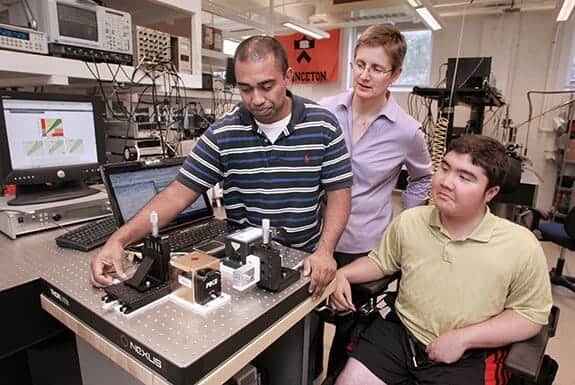
Princeton University researchers have developed a way to use a laser to measure people’s blood sugar, and, with more work to shrink the laser system to a portable size, the technique could allow diabetics to check their condition without pricking themselves to draw blood.
“We are working hard to turn engineering solutions into useful tools for people to use in their daily lives,” said Claire Gmachl, the Eugene Higgins Professor of Electrical Engineering and the project’s senior researcher. “With this work we hope to improve the lives of many diabetes sufferers who depend on frequent blood glucose monitoring.”

In an article published June 23 in the journal Biomedical Optics Express, the researchers describe how they measured blood sugar by directing their specialized laser at a person’s palm. The laser passes through the skin cells, without causing damage, and is partially absorbed by the sugar molecules in the patient’s body. The researchers use the amount of absorption to measure the level of blood sugar.
Sabbir Liakat, the paper’s lead author, said the team was pleasantly surprised at the accuracy of the method. Glucose monitors are required to produce a blood-sugar reading within 20 percent of the patient’s actual level; even an early version of the system met that standard. The current version is 84 percent accurate, Liakat said.
“It works now but we are still trying to improve it,” said Liakat, a graduate student in electrical engineering.

When the team first started, the laser was an experimental setup that filled up a moderate-sized workbench. It also needed an elaborate cooling system to work. Gmachl said the researchers have solved the cooling problem, so the laser works at room temperature. The next step is to shrink it.
“This summer, we are working to get the system on a mobile platform to take it places such as clinics to get more measurements,” Liakat said. “We are looking for a larger dataset of measurements to work with.”
The key to the system is the infrared laser’s frequency. What our eyes perceive as color is created by light’s frequency (the number of light waves that pass a point in a certain time). Red is the lowest frequency of light that humans normally can see, and infrared’s frequency is below that level. Current medical devices often use the “near-infrared,” which is just beyond what the eye can see. This frequency is not blocked by water, so it can be used in the body, which is largely made up of water. But it does interact with many acids and chemicals in the skin, so it makes it impractical to use for detecting blood sugar.
Mid-infrared light, however, is not as much affected by these other chemicals, so it works well for blood sugar. But mid-infrared light is difficult to harness with standard lasers. It also requires relatively high power and stability to penetrate the skin and scatter off bodily fluid. (The target is not the blood but fluid called dermal interstitial fluid, which has a strong correlation with blood sugar.)
The breakthrough came from the use of a new type of device that is particularly adept at producing mid-infrared frequencies — a quantum cascade laser.

In many lasers, the frequency of the beam depends on the material that makes up the laser — a helium-neon laser, for example, produces a certain frequency band of light. But in a quantum cascade laser, in which electrons pass through a “cascade” of semiconductor layers, the beam can be set to one of a number of different frequencies. The ability to specify the frequency allowed the researchers to produce a laser in the mid-infrared region. Recent improvements in quantum cascade lasers also provided for increased power and stability needed to penetrate the skin.
To conduct their experiment, the researchers used the laser to measure the blood sugar of three healthy people before and after they each ate 20 jellybeans, which raise blood sugar levels. The researchers also checked the measurements with a finger-prick test. They conducted the measurements repeatedly over several weeks.
The researchers said their results indicated that the laser measurements readings produced average errors somewhat larger than the standard blood sugar monitors, but remained within the clinical requirement for accuracy.

“Because the quantum cascade laser can be designed to emit light across a very wide wavelength range, its usability is not just for glucose detection, but could conceivably be used for other medical sensing and monitoring applications,” Gmachl said.
Besides Liakat and Gmachl, researchers included Kevin Bors, Class of 2013, Laura Xu, Class of 2015, and Callie Woods, Class of 2014, who worked on the project as undergraduate students majoring in electrical engineering; and Jessica Doyle, a teacher at Hunterdon Regional Central High School.
Support for the research was provided in part by the Wendy and Eric Schmidt Foundation, the National Science Foundation, Daylight Solutions Inc., and Opto-Knowledge Systems. The research involving human subjects was conducted according to regulations set by the Princeton University Institutional Review Board.